Exploring the Spanish Colonial Style: A Timeless design for the Texas Hill Country
Spanish Colonial architecture is a remarkable style best known for its simplicity, strong massing and proportions, and the use of robust materials such as timber, limestone, clay, and adobe. The style developed from vernacular building techniques used in 16th- and 17th-century Spain, during the period when the Spanish began colonizing the Americas.
Early examples of this architecture appeared in Santa Fe, New Mexico, and Florida in the 16th and 17th centuries. As the mission style spread through what is now the U.S. Southwest, settlers incorporated best practices from Spain to build churches, homes, presidios, and most notably, missions. The architecture combines durability with aesthetic appeal and has been widely adapted in revival styles throughout Texas, California, New Mexico, and Florida for decades.
Form, Function, & Style of Spanish Colonial Homes
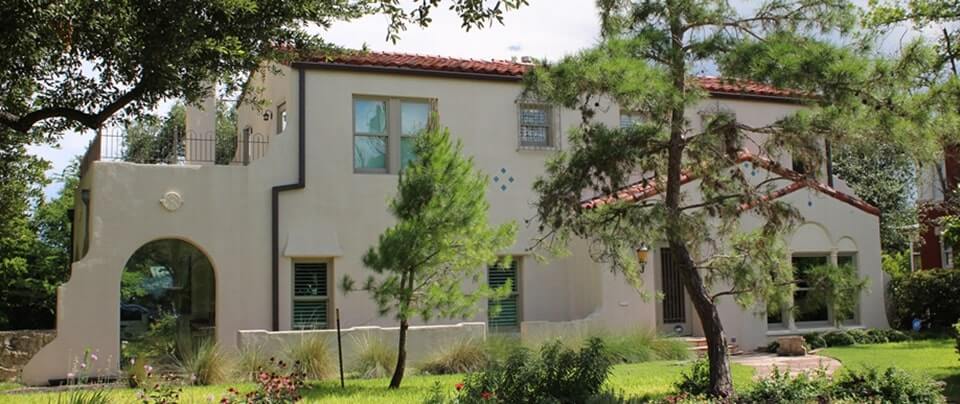
Spanish Colonial homes exhibit distinct features that define the style. Key among them is the overall configuration of the structure, especially its massing and proportions. The form is usually simple and often asymmetrical, featuring thick walls with generous proportions and a central axis, typically oriented around a main combined living and cooking area.
Other rooms often branch off in a meandering pattern from this central corridor, creating a layout that is inwardly focused and sometimes includes both internal and external courtyards for privacy and beauty. The overall footprint is typically irregular rather than strictly rectilinear.
Generally speaking, everything used in the home—whether in the architectural detailing or furnishings—should be simple yet feature substantial massing and proportions that convey a sense of strength, longevity, and beauty.
Design Elements That Define the Spanish Colonial Look
Architectural features that combined best practices from Spain with local materials in the U.S. gave rise to a new, organic architectural style—one that continues to be used and celebrated today. Typical materials often included clay tiles, wooden beams and doors, stucco, wrought iron, and locally quarried stone. The style also featured beautiful architectural details that have evolved and expanded over the years.
Deeply inset windows that create shadow lines, adding structure and three-dimensional depth to both the exterior and interior
Exposed thick wooden beams, often with simple or decorative cuts along their lengths and ends
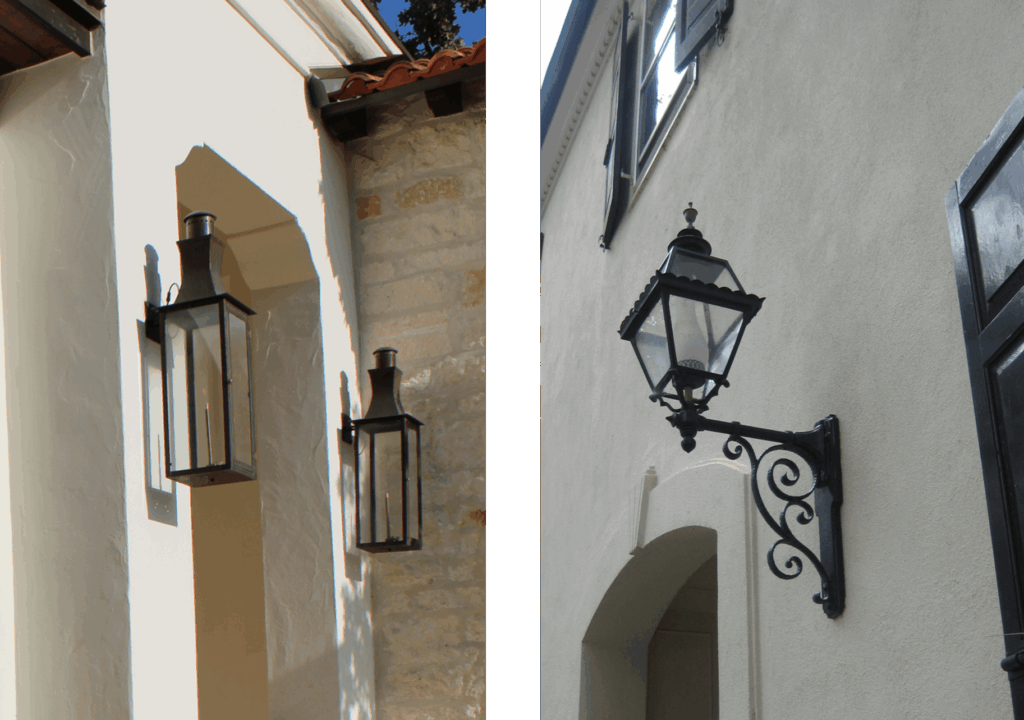
Metal light fixtures or lanterns, typically narrow along the central axis, with subtle detailing at the top of the fixture
Saltillo or Talavera decorative tile, often used to add color or to create artistic designs and patterns on interior or exterior floors, walls, or backsplashes
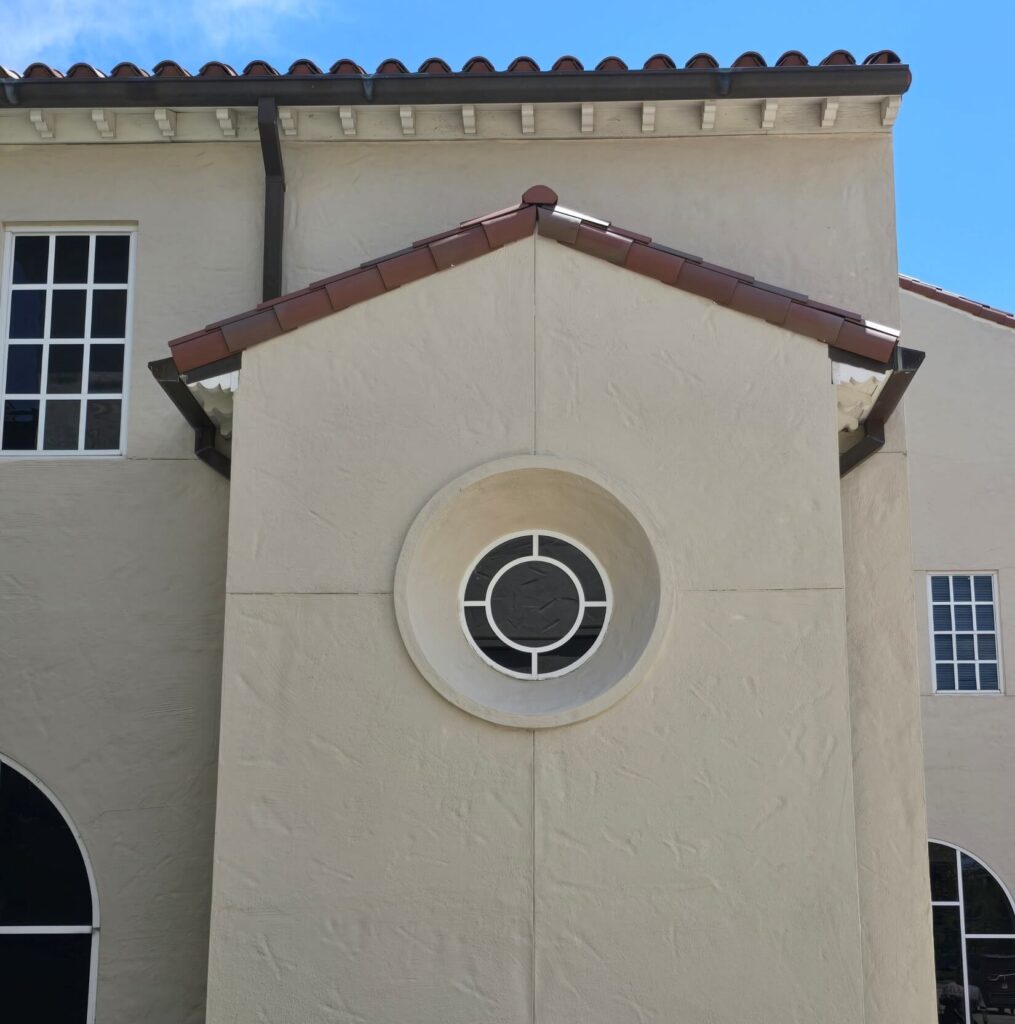
Arches, niches, and alcoves that introduce a sense of intimacy and warmth; these features often incorporate custom chamfered, scalloped, or notched corbels reminiscent of historical Spanish architectural ornamentation
Spanish Colonial architecture is an excellent choice if you’re seeking a style that is warm, traditional, and bold—built to last for generations.
We have a lot of experience and love this type of design style, so if you’re interested, Click here to contact us for assistance with your design and build project using this timeless style.
Design Elements That Define the Spanish Colonial Look
Architectural features that combined best practices from Spain with local materials in the U.S. gave rise to a new, organic architectural style—one that continues to be used and celebrated today. Typical materials often included clay tiles, wooden beams and doors, stucco, wrought iron, and locally quarried stone. The style also featured beautiful architectural details that have evolved and expanded over the years.
Deeply inset windows that create shadow lines, adding structure and three-dimensional depth to both the exterior and interior
Exposed thick wooden beams, often with simple or decorative cuts along their lengths and ends
Metal light fixtures or lanterns, typically narrow along the central axis, with subtle detailing at the top of the fixture
Saltillo or Talavera decorative tile, often used to add color or to create artistic designs and patterns on interior or exterior floors, walls, or backsplashes
Arches, niches, and alcoves that introduce a sense of intimacy and warmth; these features often incorporate custom chamfered, scalloped, or notched corbels reminiscent of historical Spanish architectural ornamentation
Spanish Colonial architecture is an excellent choice if you’re seeking a style that is warm, traditional, and bold—built to last for generations.
We have a lot of experience and love this type of design style, so if you’re interested, Click here to contact us for assistance with your design and build project using this timeless style.