
When people think about building a custom home, they usually picture the finished architecture — the stone, the windows, the rooflines, the way the home sits on the land. But long before any of that is visible, the foundation is already determining whether the house will perform the way it should for decades to come.
A well-built home begins below the finished floor.
In the Texas Hill Country, foundation work deserves serious attention. Soil conditions, rock, drainage patterns, elevation changes, plumbing coordination, reinforcement, and moisture control all have to be considered early and handled carefully. The slab is not just another phase of construction. It is the base condition for everything that follows.
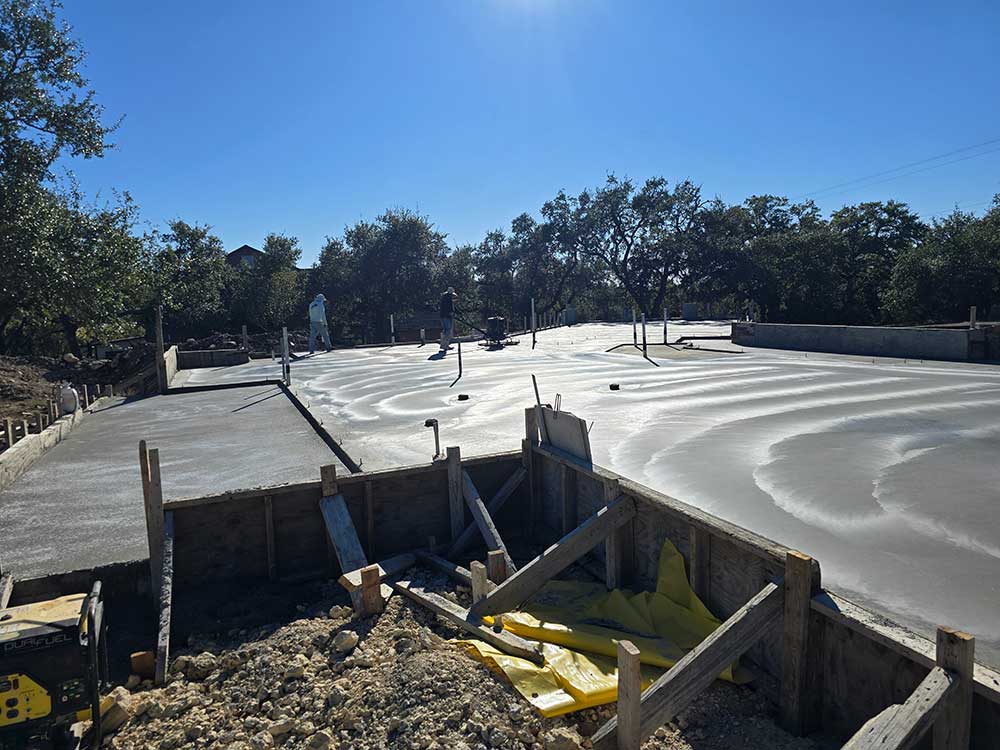
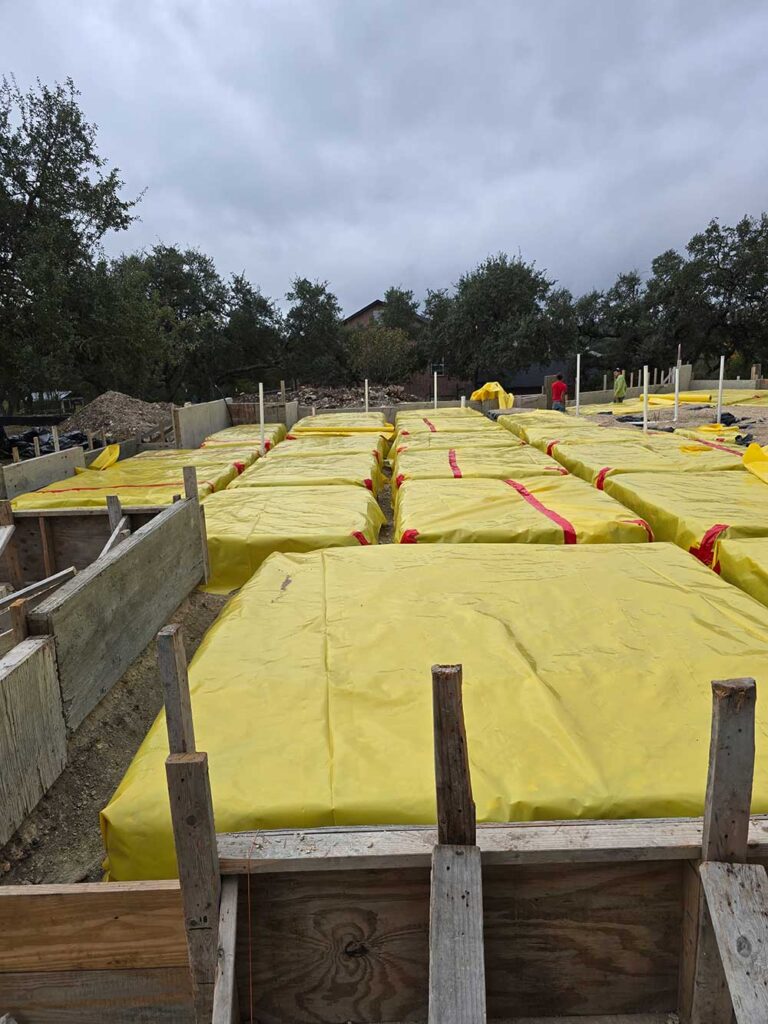
These photos show several important stages in that process — from site preparation and underslab conditions to reinforcement and the finished slab pour.
1. The foundation starts with the site, not the concrete
A slab should never be thought of as simply “poured on the ground.” By the time concrete arrives, a great deal of planning should already be in place.
The building pad must be properly prepared for the specific site conditions. In the Hill Country, that often means dealing with varying rock profiles, irregular terrain, and drainage behavior that can change significantly across a homesite. The goal is not just to create a place to pour concrete, but to establish stable, predictable support for the structure.
That work includes evaluating grade, understanding how water moves across the property, accounting for slope, and making sure the home’s position on the lot works with the land rather than against it.
2. Underslab planning matters more than most people realize
Before the pour, many of the most important decisions are already locked in.
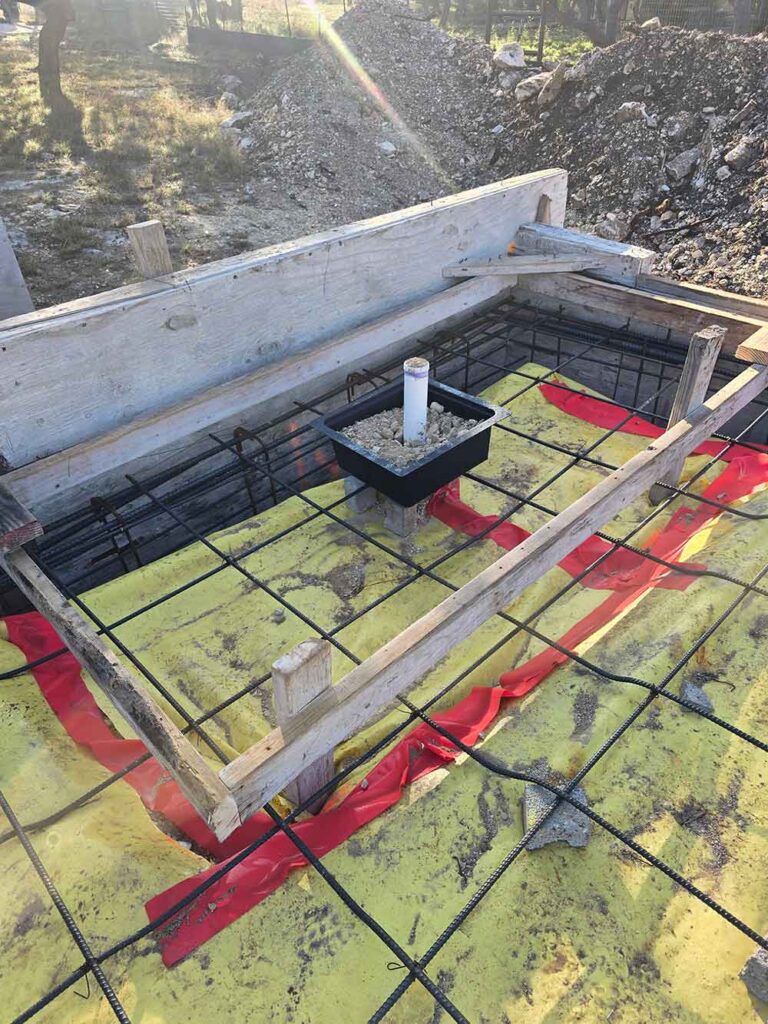
Plumbing locations must be coordinated precisely. Penetrations need to be in the right place. Any areas requiring thickened sections, beams, or special reinforcement need to be formed correctly before concrete is placed. Once the slab is in, changing these items becomes expensive and disruptive.
One of the photos shows this clearly: plumbing rough-ins and isolated formed sections are in place before the slab is poured. This is where careful coordination pays off. A good foundation is not just about strength — it is about accuracy.
3. Moisture protection is a critical part of the assembly
A quality slab system is not only about structure. Moisture control is a major consideration as well.
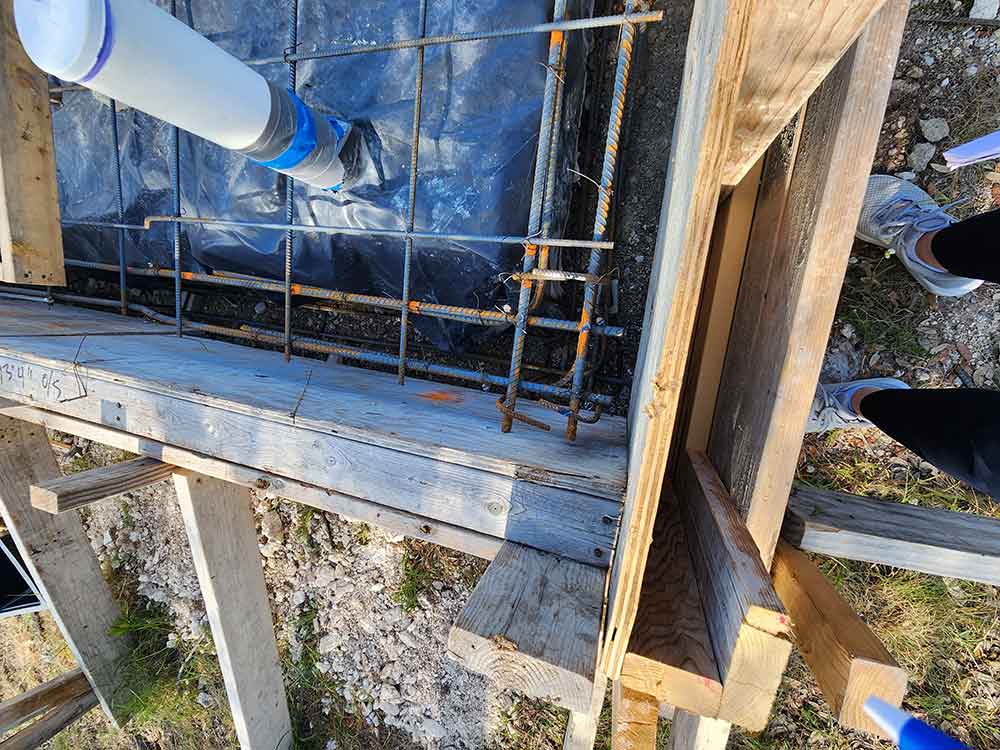
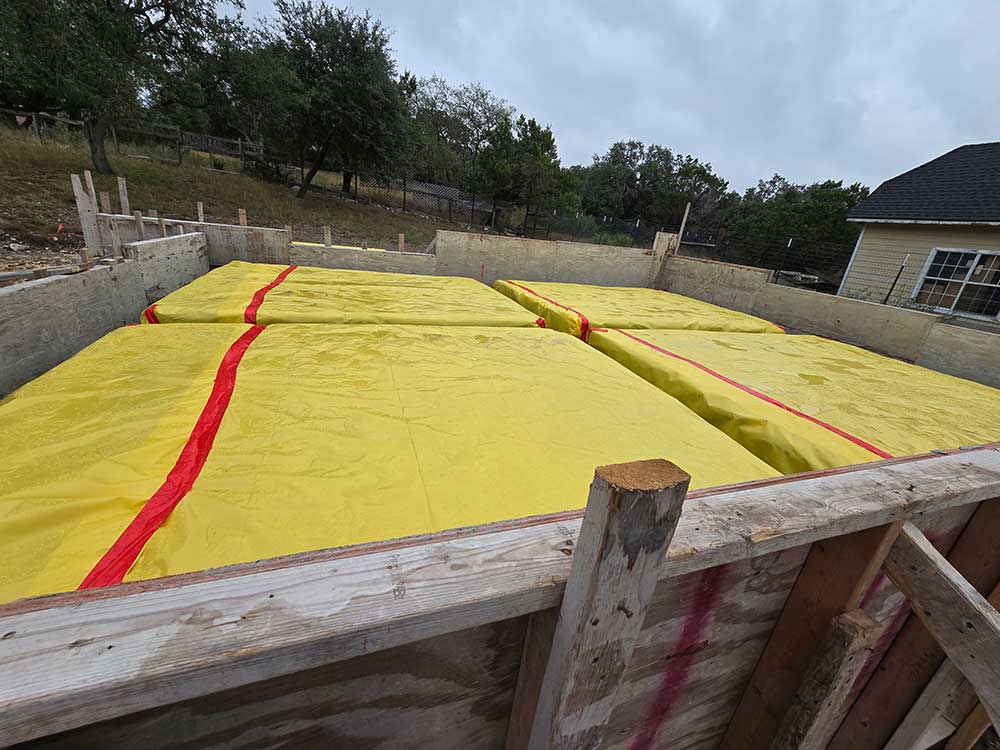
In these images, you can see underslab vapor barrier material installed before the reinforcement and concrete placement. This is an important part of protecting the home from ground moisture migrating upward through the slab assembly. Attention to seams, penetrations, and continuity matters. Sloppy work here can create problems later that are hidden from view but costly over time.
The point is simple: what goes under the slab is just as important as what goes in it.
4. Reinforcement should be deliberate, not casual
Concrete is strong in compression, but foundation performance depends heavily on proper reinforcement and placement.
The reinforcing steel shown in the photos is part of what helps the slab and beam system perform as intended. But reinforcement only does its job when it is installed correctly, supported properly, and coordinated with the foundation design. Placement, spacing, beam conditions, and transitions all matter.
This is one of the biggest reasons foundation work should never be treated like a commodity. From the outside, two slabs may look similar on pour day. Their long-term performance may be very different.
5. Formwork affects more than appearance
Formwork is temporary, but it has permanent consequences.
The edge conditions, beam depths, recesses, and transitions all depend on accurate forming. If the forms are out of alignment, if elevations are off, or if dimensions drift, those mistakes can carry through the rest of the build. Framing, finish floors, cabinetry, doors, and exterior relationships all depend on the slab being correct.
A foundation is not just structural groundwork. It is dimensional groundwork.
6. A slab pour should be judged by more than the day it looks good
Fresh concrete often looks impressive, especially right after finishing. But a good-looking pour is not the full story.
What matters is the preparation behind it:
proper subgrade work, coordinated rough-ins, thoughtful moisture protection, correctly installed reinforcement, and disciplined layout. The finished slab in these photos represents the visible result of many decisions made beforehand.
That is the real lesson in foundation work: the quality of the outcome is largely determined before the concrete truck ever shows up.
7. Every good house depends on what no one sees later
Once framing begins, the foundation disappears into the background. Clients naturally focus on the architecture taking shape above. But every wall, opening, finish, and detail depends on the work done at this stage.
If the foundation is approached carefully, the rest of the build has a better chance to go smoothly. If it is rushed or treated casually, problems tend to surface later — and usually at the worst time.
For us, that is why foundation work deserves real respect. It is one of the least glamorous phases of construction, but one of the most important.
Final thought
A custom home should not begin with shortcuts. It should begin with discipline.
Before the limestone, before the beams, before the vaulted ceilings and deep-set windows, there is the foundation — quietly carrying the entire burden of what the home will become. Done properly, it creates the stability, accuracy, and confidence that good building requires.
Because in the end, the strength of a home is not only in what you see. It is in what was considered from the ground up.